
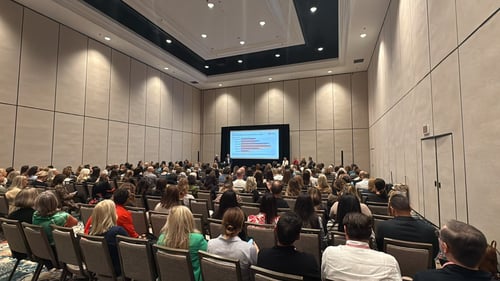
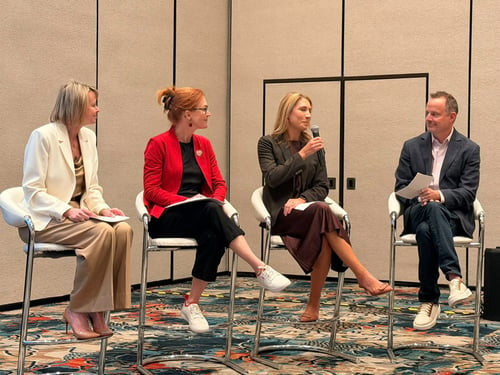
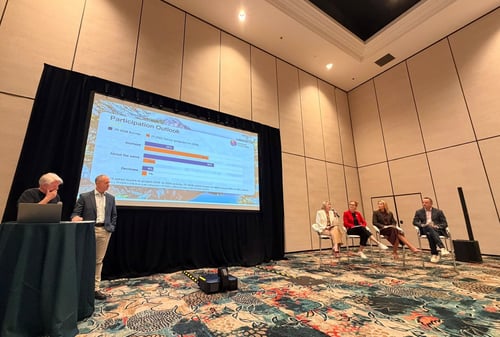
I had the opportunity to join industry colleagues alongside SITE and the Incentive Research Foundation (IRF) on stage at IMEX America to share the findings from the newly released 2026 Incentive Travel Index (ITI).
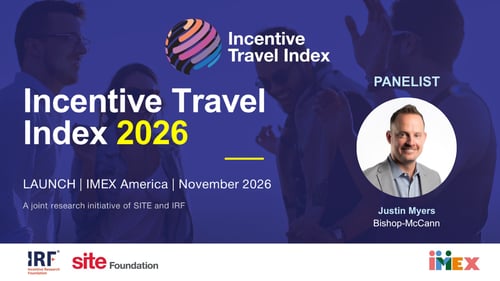
Conducted in partnership with Oxford Economics, this annual research provides one of the most comprehensive looks at the state of incentive travel, capturing insights from more than 2,000 industry professionals across 83 countries.
There was a lot to unpack during our discussion, but several findings stood out to me. Companies are continuing to invest more in their incentive programs, destination preferences are evolving, and there's a growing opportunity for our industry to think more intentionally about the experiences we're creating and the business outcomes we're delivering.
Here are a few of my biggest takeaways from this year's research.
Key Takeaways From the 2026 Incentive Travel Index
The 2026 Incentive Travel Index reveals five key trends shaping incentive travel: rising per-person budgets, growing interest in emerging destinations, more complex destination selection, greater demand for meaningful experiences, and increased expectations for measurable business impact.
1. Companies Are Spending More on Incentive Travel
Despite continued economic uncertainty and pressure on corporate budgets, one of the most encouraging findings is that average incentive travel spending per person increased 7.8% in 2026, reaching $5,500 globally.
That's up from $5,100 in 2025 and $4,900 in 2024. North American buyers are investing even more, averaging $6,100 per participant, while the technology sector leads industry spending at approximately $6,000 per person.
What's particularly notable is that this 7.8% increase outpaced both forecast global inflation of 4.5% and overall business travel spending growth of 7.1%. In other words, incentive travel spending is growing faster than inflation alone would suggest.
And it's not just the averages that are increasing. Looking specifically at U.S. buyers, we're seeing a noticeable shift toward higher spending tiers. The share of programs spending $7,500 or more per person increased from 25% in 2025 to 29% in 2026. Meanwhile, programs spending less than $3,000 per person declined from 28% to 23%.
That shift is particularly interesting because it suggests companies aren't simply absorbing higher costs across the board. A greater proportion of programs are moving into premium spending categories, reinforcing the continued willingness of organizations to invest in high-quality incentive experiences.
Of course, some of that increase reflects the reality of rising hotel rates, airfare, and other program costs. But I think there's a bigger story here.
Companies continue to recognize incentive travel as an important investment in their people and business performance. Even as organizations scrutinize spending, they're still willing to make significant investments in experiences that motivate top performers, strengthen relationships, and drive results.
That doesn't mean budgets are unlimited. In fact, nearly 31% of buyers anticipate budget reductions next year. We're seeing clients become much more intentional about where they're allocating their dollars and looking for opportunities to maximize the impact of every investment.
For our industry, the challenge isn't simply delivering more expensive experiences. It's ensuring those additional dollars translate into greater value for both the participants and the organizations funding the programs.
2. Incentive Travel Is Expanding Beyond Traditional Destinations
One of the most interesting trends in this year's research is the growing interest in Europe, particularly destinations that haven't historically been at the top of incentive travel consideration lists.
Western Europe leads the global destination momentum rankings at +29.3%, followed by Emerging Europe at +25.3%.
These percentages represent the difference between buyers planning to use a destination more frequently and those planning to use it less. What's particularly interesting is the strength of that positive momentum across both established and emerging European destinations.
Looking specifically at North American buyers, the historical comparison tells an even more interesting story.
Western Europe has remained remarkably consistent in its relative destination momentum over the past four years, while Emerging Europe has now entered the top five destinations for North American buyers. At the same time, the relative momentum of traditional destinations like Mexico and the United States has declined significantly.
In the 2026 rankings, Western Europe holds the second position at 85% of the leading destination's momentum, followed by the United States at 70%. Mexico and Emerging Europe are now tied at 44%. Just two years ago, Mexico was at 88%, while Emerging Europe wasn't even in the top five.
I don't interpret this as incentive travel moving away from traditional destinations, but rather as the industry expanding its horizons.
For years, many North American incentive programs have gravitated toward familiar destinations in Mexico, the Caribbean, and Hawaii. Those destinations will absolutely continue to play an important role, but we're seeing growing interest in experiences that offer something different.
Destinations like Croatia, Montenegro, the Czech Republic, and Slovenia provide a compelling combination of incredible history, authentic cultural experiences, distinctive luxury properties, and opportunities for discovery. For well-traveled incentive qualifiers who may have already visited many traditional destinations, the opportunity to discover somewhere new offers a sense of exclusivity that can be incredibly motivating.
There's also a potential value proposition. Certain emerging destinations can offer exceptional luxury and unique experiences at a more competitive cost than some of Europe's most established markets.
Of course, airlift and accessibility remain critical considerations, particularly when moving large groups from multiple departure cities. But the growing momentum behind these destinations tells me companies are increasingly willing to look beyond the familiar to create something truly differentiated.
And I think that's an exciting development for our industry.
3. Destination Selection Is Becoming More Complex
While interest in new destinations is growing, so are the considerations that go into selecting them.
According to the research, 60.5% of buyers report that geopolitical instability is already disrupting the destinations they use, and more than 83% have changed their booking behavior in response to geopolitical sentiment over the past year.
Air access, affordability, safety, and how welcome participants will feel in a destination are all playing increasingly important roles in the decision-making process.
At Bishop-McCann, we're seeing these conversations happen much earlier in the planning process.
We're also seeing organizations become more sensitive to how their employees perceive certain destinations. Sometimes those perceptions align with actual conditions, and sometimes they don't.
This is where our firsthand experience operating programs all over the world (as well as our relationships with destination management companies, destination marketing organizations, and local partners) become incredibly valuable. This firsthand knowledge helps us evaluate destinations beyond the headlines and provide clients with the confidence to make informed decisions.
Our role as strategic advisors is to help clients balance accessibility, affordability, safety, and creativity without losing sight of what makes an incentive experience extraordinary.
4. Luxury Matters, but Meaningful Experiences Matter More
Another interesting finding is that nearly 48% of buyers now identify top-tier accommodations as a destination must-have, up significantly from 34% in 2025.
Clearly, the quality of the hotel experience remains an important part of delivering a premium incentive program.
But one of the conversations I found most interesting during our IMEX panel was around the distinction between experiences that are motivational, memorable, and meaningful.
A beautiful beach destination and luxury resort might be incredibly motivational when someone is working to qualify for a trip. But what will they remember five years later? And what will make that experience personally meaningful?
I would argue that it's often the authentic cultural experiences, personal connections, and unexpected moments that create the most lasting impact.
We're also seeing a shift in how attendees want to experience destinations. Rather than having every hour filled with organized activities, many participants value having more free time and flexibility to explore on their own terms.
That creates an opportunity to rethink traditional incentive program design.
A thoughtfully curated list of local restaurants, unique neighborhoods, cultural attractions, and hidden gems can sometimes create a more personalized and authentic destination experience than another scheduled group activity.
And in some cases, it can actually reduce program costs.
The takeaway isn't that luxury or traditional incentive activities are becoming less important. It's that the best programs find the right balance between exceptional hospitality, authentic destination experiences, and the freedom for attendees to create their own memories.
5. Demonstrating Business Impact Is More Important Than Ever
As companies continue to make significant investments in incentive travel, the importance of demonstrating a measurable return on that investment is only growing.
The research reinforces that organizations are investing in these programs to achieve tangible business objectives. Increased sales and profitability, individual productivity, employee engagement, and retention all rank among the leading program goals.
Measuring the success of incentive travel programs certainly isn't a new concept. But I believe we're seeing greater expectations from corporate stakeholders for clearly defined KPIs, stronger connections to business objectives, and more tangible evidence of program effectiveness.
And rightfully so.
We've become very good as an industry at creating incentive trips people want to qualify for. But the real question is whether those experiences are delivering the outcomes our clients are trying to achieve.
Are we reinforcing the behaviors organizations want to encourage? Are we strengthening relationships and building loyalty? Are we positively influencing employee engagement, retention, or sales performance?
And importantly, are we establishing the right metrics before a program begins, so we can meaningfully evaluate its success afterward?
This requires moving beyond traditional measures like attendee satisfaction and program execution. Those are certainly important, but they don't tell the whole story.
We need to be working with clients from the beginning to define what success looks like, align the experience with those objectives, and establish measurable KPIs that demonstrate the value of their investment.
During our IMEX panel, I shared my belief that the most successful incentive programs should deliver on four dimensions:
Motivational. Memorable. Meaningful. Measurable.
When we can consistently deliver on all four, we're doing more than creating incredible trips. We're demonstrating the strategic value of incentive travel as a driver of business performance.
Looking Ahead
If there's one overarching message from the 2026 Incentive Travel Index, it's that incentive travel continues to evolve.
Companies are investing more per participant. Destination preferences are expanding. Attendees are looking for more personalized and authentic experiences. And organizations are increasingly focused on ensuring their investments deliver real value.
For those of us in the incentive travel industry, that's both an opportunity and a responsibility.
We need to continue challenging traditional thinking, introducing clients to new possibilities, and designing experiences that go beyond the expected.
Because at the end of the day, the success of an incentive program shouldn't be measured solely by where we take people or how much we spend.
It should be measured by what the experience inspires, the connections it creates, and the impact it delivers long after everyone returns home.
Bishop-McCann is proud to support the Incentive Travel Index as a research sponsor and to partner with SITE and the Incentive Research Foundation in advancing the incentive travel industry. Connect with the BMC team to plan your next incentive experience.
Explore the full 2026 Incentive Travel Research. Additionally, Justin Myers will join SITE's webinar, Unpacking the Incentive Travel Index 2026, October 30, 2026 at 10 AM CST.