
Tech companies can use events to drive product adoption by giving customers hands-on opportunities to explore the technology, learn practical use cases, discover new features, and see how peers are using the product. Personalized guidance and interactive demonstrations can also help customers understand how to apply the technology to their own needs. To determine whether these experiences actually drive adoption, companies should connect them to measurable post-event product behaviors.
Events can help customers get more value from your product at every stage of the customer journey. Onboarding workshops walk new users through setup and help them get started. User group conferences allow customers to deepen their product knowledge, discover new capabilities, and learn new ways to apply the platform. Ongoing training sessions highlight overlooked tools and capabilities, helping customers expand their use of the product and introduce it to other teams. By meeting customers with relevant education and experiences at each stage, events help turn initial product use into deeper adoption and broader use across the organization.
Quick Links
- Why Are Events Effective for Driving Product Adoption?
- What Types of Events Can Increase Product Adoption?
- How Can Tech Companies Design Events Around Product Adoption?
- What Should Happen After the Event to Maintain Product Adoption Momentum?
- How Should Tech Companies Measure Whether an Event Increased Product Adoption?
- Turn Your Next Tech Event Into a Product Adoption Opportunity
- Frequently Asked Questions About How Tech Events Can Drive Product Adoption
Why Are Events Effective for Driving Product Adoption?
Events combine education, experience, community, and direct access to experts in a way that digital product communications alone often cannot.
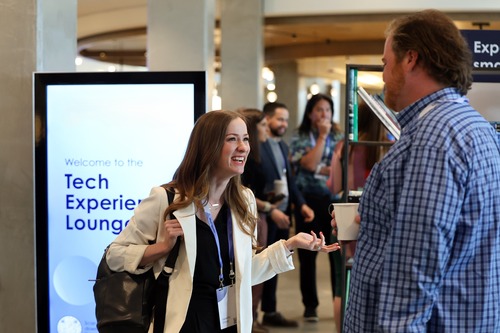
Consider a customer who reads an email about a new feature but isn’t sure how it applies to their needs. At an event, they watch someone use it to solve a familiar problem, then try it with an expert nearby. A conversation with another user introduces an approach they hadn’t considered. The feature now has a purpose that they understand and a practical application they can take back to their organization.
This kind of experience aligns with growing expectations for B2B events, where attendees want opportunities to participate and explore what matters to them.
What Types of Events Can Increase Product Adoption?
Different event formats can support different product adoption goals, including user conferences, launch events, workshops, peer-learning sessions, and virtual events. The right format depends on what customers need to learn, experience, or do and the level of support they need to get there. Used strategically, these events give tech companies a competitive edge by helping customers get more value from the product and discover capabilities they might not find through digital product communications alone.
User Conferences Deepen Product Adoption
SaaS user conferences help customers discover how your product solves challenges beyond their current use. Customer stories show what peers have accomplished, while product labs give attendees opportunities to practice new workflows with guidance from your team. Networking also gives users space to compare approaches and work through shared challenges.
Together, these experiences give attendees practical ideas and the confidence to apply them when they return to their teams. By helping customers discover more ways to use the product and get greater value from it, user conferences strengthen event ROI while increasing product adoption.
Product Launch Events Build Awareness and Interest
Product launch events can help customers understand what a new feature or product offers, why it matters, and how they can use it. Demonstrations should show the product in a relevant context, giving attendees a clear view of what it can do and the value it can provide. Then give them time to try it, ask questions, and get guidance from product experts.
Include clear next steps to help customers move from initial interest to taking action, whether that means trying a new feature, adopting a new product, or exploring additional capabilities.
Workshops and Training Build Product Confidence
Workshops help customers build confidence with tasks they find challenging or haven’t yet mastered. Each session should focus on a specific outcome, such as building a dashboard around their reporting needs, configuring a complex workflow, or exploring advanced product capabilities. Give attendees time to complete the task, troubleshoot problems, and get feedback from a trainer or product expert. An experienced event partner, like Bishop-McCann, can help coordinate these workshops, so product teams can focus on customer conversations while the event logistics and production are managed around them.
Provide step-by-step instructions attendees can use afterward, so they can repeat the process independently and incorporate the new capability into their regular use of the product.
Customer Communities and Peer Learning Expand Product Use
User groups help customers learn from others who face similar challenges. Invite experienced users to walk through a problem they solved with your product, including why they chose that approach, what needed adjustment, and what results they achieved.
Follow with small-group discussions where attendees can ask questions, compare approaches, and consider how to adapt what they learned to their own needs. These conversations help customers discover value in overlooked features and work through obstacles that may be limiting how they use the product.
Virtual Events Extend Product Education
Virtual sessions can reinforce learning from in-person events while giving customers ongoing opportunities to build product knowledge and get support. After attendees have had time to try a new feature or capability, bring them back for a focused session on common questions, challenges, and useful adjustments. Let those questions shape the agenda, so the session addresses what’s getting in the way of regular product use.
Share a recording and a practice activity that reinforces what they learned, giving customers a way to build their skills and continue using the product between events.

How Can Tech Companies Design Events Around Product Adoption?
Tech companies can design events around product adoption by starting with the behaviors they want customers to change or adopt, then building the experience around the education, practice, and support needed to make that change.
For example, an event’s goal might be to help customers utilize an advanced feature, explore a new capability, or expand how they use the product. When planning a user conference, companies can use these goals to shape the content and experiences they offer throughout the event. An event partner, like Bishop-McCann, works with tech/SaaS companies to connect these elements, so the event experience supports both customer needs and business objectives.
1. Start With the Product Behavior You Want to Change
Before creating sessions, ask, “What do we want customers to do differently after this event?” Your answer gives the event a clear, measurable goal. For example, instead of “get more value from the product,” aim for a specific action, such as creating and using a custom dashboard.
Other goals might be activating an underused feature, adopting a new capability, or completing onboarding. You may also focus on integrating tools, bringing more teams into the product, or moving users from basic to advanced functions.
2. Segment Content by User Needs and Experience
A new customer shouldn't necessarily receive the same experience as a power user. Build content tracks around those differences, using role or product experience as a starting point. Depending on your audience, group sessions by industry, use case, customer lifecycle stage, or product.
Ask about attendees’ needs and product experience during registration, then use an event app to recommend sessions based on their responses. For example, an administrator setting up the software should receive different session recommendations than someone who uses the product daily.
3. Make Product Education Interactive
Give customers opportunities to participate beyond passively listening to presentations. Product labs and guided exercises let customers put what they learn into practice, while live demonstrations show how features work in realistic scenarios. Small-group workshops offer focused instruction, while ask-the-expert sessions and one-on-one consultations address questions specific to their needs.
This approach aligns with growing expectations for interactive, personalized B2B event experiences, as highlighted by Forrester’s State of B2B Events Survey.
4. Use Customer Stories to Demonstrate Real-World Applications
Customer stories at conferences help attendees see how a feature can solve a real problem. With complex technology, customers may understand what a feature can do without seeing how they could apply it to their own needs.
Show the problem a customer faced, how they used the product to address it, and what changed as a result. This gives attendees a real-world example they can use to consider how the product might address similar challenges or opportunities for them.
5. Bring Product Teams Into the Experience
Give customers time with the experts who can help them move past obstacles they are facing. Offer scheduled consultations or other opportunities where attendees can discuss their setup, ask detailed questions, and leave with clear next steps. Track recurring questions to identify gaps in training or support that may be limiting product use.
Additionally, match customers with the right people. Technical experts can troubleshoot setup issues while trainers can guide hands-on practice. Giving customers direct access to these experts helps them overcome barriers and feel more confident using its capabilities.
What Should Happen After the Event to Maintain Product Adoption Momentum?
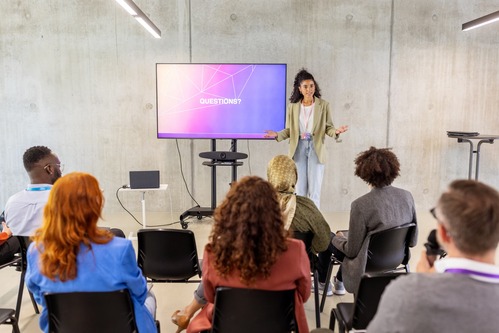
Continue the experience after the event with follow-up that helps each customer put what they learned into practice. A new user may need guidance as they get started, while someone who asked a detailed question may need a follow-up conversation with a product expert.
Decide how follow-up will be handled before the event, then use what attendees did, asked, and showed interest in to guide the next steps. Follow-ups may include:
- Connecting attendees with customer success managers or the expert they spoke with at the conference to work through outstanding questions
- Inviting users to advanced training when they’re ready for more practice
- Sending workshop materials with a task to try, such as building a dashboard
- Sharing recordings or tutorials, so customers can review the steps
How Should Tech Companies Measure Whether an Event Increased Product Adoption?
Registrations, attendance, and satisfaction scores measure the event experience, but they don’t show whether customers changed how they use the product. Connect event participation with subsequent product behavior to see whether customers put what they learned into practice.
Track longer-term outcomes such as retention and account growth, recognizing that factors beyond the event also influence them. To measure your technology event strategy, choose key performance indicators (KPIs) that align with the goals you set during planning:
- Compare product logins or active users before and after the event
- Track feature activation and ongoing usage
- Track new integrations enabled
- Measure training completion
- Measure adoption across additional departments or users
- Review customer success interactions
- Identify expansion revenue or other account growth
- Monitor trial-to-paid conversions
- Monitor renewals and customer retention
Turn Your Next Tech Event Into a Product Adoption Opportunity
Successful tech company events give customers the knowledge, experience, and confidence to get more value from your product. When attendees understand what a product can do, practice new capabilities, and know what to do next, they have a clearer path toward continued use and deeper engagement with your company.
Connect with Bishop-McCann to build a user conference strategy that turns product interest into action.

Frequently Asked Questions About How Tech Events Can Drive Product Adoption
How can events help increase product adoption?
Events can increase product adoption by giving customers practical opportunities to learn, test, and apply product capabilities. Hands-on demonstrations, workshops, customer stories, and access to product experts help users understand how specific features fit their workflows and give them the confidence to use those features after the event.
How long does it take to see product adoption after an event?
Product adoption can happen immediately when attendees try a new feature or capability, but broader changes in usage may take weeks or months. Track both early indicators, such as feature activation and training completion, and longer-term outcomes, such as ongoing usage, expansion, and retention.
How can event data be used to improve future product adoption?
Look at what attendees attended, asked about, and followed up on alongside subsequent product usage. Patterns can reveal which features generate interest, where customers need more guidance, and which event experiences are most likely to lead to continued product use.
How can user conferences encourage customers to use more product features?
User conferences can expose customers to capabilities they may not currently use through product labs, demonstrations, peer success stories, expert consultations, and role-specific education. The most effective sessions connect features to real customer challenges and give attendees an opportunity to practice what they learn before returning to work.