Launching a pharmaceutical product requires building confidence, clarity, and momentum across internal teams and external stakeholders, all while navigating one of the most regulated environments in the events industry.
The stakes are high for pharmaceutical event managers, which is why strategic planning, seamless execution, and measurable outcomes are critical for your go-to-market success.
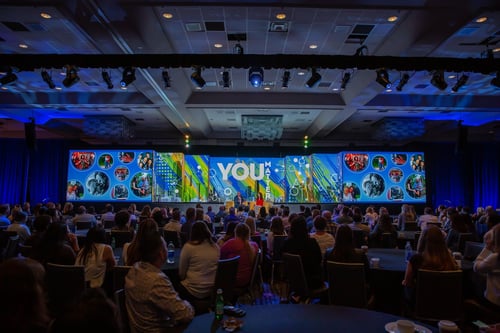
From live pre-launch events to advisory board meetings, event planners have significant opportunities to play a pivotal role in delivering successful pharmaceutical product launches while also capturing the data needed to demonstrate impact.
Quick Links
-
How to Justify the Need for Events in a Pharma Product Launch
-
What Are the Best Practices for High-Impact Pharmaceutical Product Launch Events?
-
What Sets Bishop-McCann Apart in Pharmaceutical Event Management
How to Justify the Need For Events in a Pharma Product Launch?
Clients are tightening budgets, which puts additional scrutiny on event planners to justify the need for pharmaceutical event management. Plain and simple, events are critical to a successful pharmaceutical product launch. Here’s why:
Creating Awareness and Early Momentum
Pharmaceutical product launches align your internal teams with your external stakeholders while generating excitement and a greater understanding of the product along the way.
Pre-launch and launch events create a controlled environment where organizations can build anticipation, clarify positioning, and ensure that everyone involved understands what the product is and why it matters to your audience.
Live events are particularly powerful because they combine education with experience. When internal teams and external stakeholders engage with the product narrative in real time, retention and confidence increase significantly.
Pre-launch meetings, advisory boards, and internal kickoffs are also important opportunities to establish early momentum that carries into broader go-to-market efforts.
Building Credibility and Trust
Credibility is of utmost importance when it comes to a successful pharmaceutical product launch.
Pharmaceutical events provide a platform for credibility to deepen through peer validation, scientific exchange, and expert-led discussion. Involving Key Opinion Leaders (KOLs) in your events helps reinforce trust and lend authority to product claims.
This is where pharmaceutical event managers play an important role. Strategic pharmaceutical event management ensures these interactions are thoughtfully designed, compliant, and valuable. The right speakers, formats, and discussion structures allow attendees to ask questions, engage in meaningful dialogue, and leave with a deeper understanding of the product’s clinical relevance.
Why does trust matter so much in pharma launches? Because credibility, transparency, and peer validation consistently separate successful launches from those that struggle to gain traction.
Driving Engagement for HCPs, Internal Teams, and Stakeholders
A pharmaceutical product launch often requires engaging multiple audiences simultaneously. Internal sales teams need deep product knowledge and confidence. Healthcare professionals (HCPs) need clear, evidence-based information. Stakeholders need reassurance that the launch strategy is sound.
Interactive workshops, hands-on demonstrations, and structured Q&A sessions help meet these needs. At a recent Bishop-McCann-managed launch, engagement extended beyond traditional sessions. Knowledge checkpoints, branded as “Own It Labs,” required participants to actively present and sell the product to peers, reinforcing learning through real-world application.
Why engage with key audiences early in the pharma product launch process? Because stakeholders must be educated well in advance, so they can become an outspoken advocate at launch time.

What Are the Best Practices for High-Impact Pharmaceutical Product Launch Events?
Pharmaceutical event management is highly regulated, which makes it a bit more nuanced for meeting planners. Follow these tips for a successful pharmaceutical product launch event:
Selecting the Right Event Format
Not every pharmaceutical event serves the same purpose. Conferences, advisory boards, roadshows, and virtual meetings each play a distinct role in the launch lifecycle.
Strategic pharmaceutical event managers start by asking clear questions: Who needs to attend? What decisions or behaviors should result from this event? How will success be measured?
By listening to your client’s launch goals, audience size, geography, and regulatory considerations, you can determine which event format will make the biggest impact and ensure resources are used efficiently.
Ensuring Compliance Without Sacrificing Engagement
Compliance is non-negotiable in pharmaceutical event management. Regulations related to HCP transparency, data privacy, and industry codes (such as PhRMA and EFPIA) shape every planning decision.
The most effective compliance strategies are proactive, not reactive. Bishop-McCann approaches compliance through close collaboration with clients, beginning with a clear understanding of objectives, internal requirements, and regulatory expectations.
Some clients bring established templates and tracking tools for compliance record-keeping. Others require bespoke solutions built specifically for their program. In both cases, alignment early in the planning process helps avoid friction later and allows creativity to thrive within defined boundaries.
For a deeper look at compliance considerations, explore Bishop-McCann’s guidance on HCP compliance at pharmaceutical events.
Aligning Stakeholders Around a Unified Strategy
Internal alignment is critical to pharmaceutical event management success. This includes coordinating between medical, commercial, legal, and compliance teams, who may have different timelines and priorities.
Bringing stakeholders into the planning process early ensures consistent messaging across all event touchpoints. It also reduces last-minute changes that can disrupt timelines and budgets. A unified strategy creates clarity for attendees and confidence for leadership.
Designing Content That Educates and Engages
Educational rigor is essential, but information alone is not enough. High-impact pharmaceutical events balance scientific accuracy with compelling storytelling. Attendees should understand not only the data, but how it applies in real-world scenarios.
Interactive elements such as live polling, case studies, peer discussions, and role-based simulations increase engagement and reinforce learning. These formats also generate valuable insights that can be captured and analyzed post-event.
How to Prove ROI in Pharmaceutical Events?
As with any event, measurement is critical to demonstrate success and to support informed decisions about future budget allocation. Clear measurement ensures results resonate with leadership. Here’s how to plan early for effective post-event evaluation.
Identify Key Metrics to Track for Pharma Events
Event managers must collaborate with clients to determine what key performance indicators are important to the pharmaceutical product launch. Then, you can define the success metrics that are tied directly to launch objectives.
Key metrics to consider include:
- Attendance
- Engagement rates
- Post-event survey response rates
- Sentiment analysis
- Downstream metrics, such as sales rep interactions, follow-up engagements, and trends in prescribing behavior
For example, at a recent pharmaceutical product launch, Bishop-McCann worked with the client to design post-event surveys aligned to their specific key performance indicators. Rather than generic satisfaction questions, the survey focused on specifics like:
- How prepared do you feel to discuss this product with HCP, patients, and caregivers?
- Which resources or tools provided at the meeting do you feel most confident using?
- Are there any unanswered questions you still have about the product?
- What additional training or support would help you feel more ready to promote the product?
These insights provided a clear picture of whether the event achieved its primary goal of preparing teams to successfully launch and support the product.
Utilize Data to Improve Future Events
Data collection should not end when the event does. Analytics enable continuous improvement across future launches and programs.
Translating this data into actionable insights helps sales, medical, and marketing teams refine their strategies and determine which event types, key messages, and content resonate with audiences. It also strengthens the case for future investment in strategic events by clearly demonstrating value.
What Sets Bishop-McCann Apart in Pharmaceutical Event Management
In a highly regulated industry, pharmaceutical product launches require seamless coordination. Bishop-McCann’s strength lies in its ability to serve as a true extension of the client team, offering comprehensive support across logistics, creative strategy, production, event tech, gifting, venue management, and more.
Clients value the ability to work with a single partner who understands both the regulatory landscape and the experiential demands of modern pharmaceutical events. This integrated approach reduces complexity, enhances communication, and ensures that every element of the event supports the larger launch strategy.
Working with an experienced event partner streamlines success. Connect with our team to elevate your next pharma product launch or other life sciences event!
Pharmaceutical & Life Science Event FAQs
Here are quick answers to common questions for pharmaceutical product launch events and life sciences events in general.
How do events support a successful pharmaceutical product launch?
Events support a successful pharmaceutical product launch by building early momentum, aligning internal teams, educating healthcare professionals, and establishing credibility through compliant, expert-led engagement. Strategic pre-launch and launch events create a controlled environment to communicate clinical value, reinforce positioning, and generate advocacy that accelerates go-to-market success.
What makes pharmaceutical event planning different from other corporate events?
Pharmaceutical event planning must navigate strict regulations, detailed attendee requirements, and complex content. Bishop-McCann has decades of experience planning pharmaceutical meetings and understands the differences between the various kinds of programs, from internal meetings and product launches to congresses and national sales meetings. From strategy to reporting, the team designs programs that meet compliance standards while delivering engaging, educational experiences.
How do you keep pharmaceutical and life sciences meetings engaging while staying compliant?
Pharmaceutical and life sciences meetings have strict regulatory requirements, but they can still be engaging, creative, and memorable. Bishop-McCann has decades of experience in pharmaceutical event planning and understands the unique needs of the industry's varying event types, from investigator meetings and advisory boards to national sales meetings and product launches. They bring compliant meetings to life through creative storytelling, immersive environments, purposeful design, event technology, and seamless logistics.
How can live event production elevate pharmaceutical and life sciences events?
Live event production elevates pharmaceutical and life sciences events by ensuring complex content is delivered clearly, compliantly, and consistently across audiences. Strategic stage design, audiovisual production, show flow, and rehearsals enhance engagement while supporting regulatory requirements, speaker accuracy, and attendee flow—resulting in a professional, high-impact experience that reinforces trust and message clarity.